Autors: Nataļja Sujunšalijeva
Avots: lnmm.gov.lv
Spring in Japanese culture brings together the rhythms of nature, the cycles of human life and an aesthetic way of perceiving the world into a single, symbolically rich experience. It marks the boundary between the old and the new both in nature and in human life, and thus becomes a significant point of departure for change.
Reklāma

In Japanese aesthetics, spring is associated with an awareness of the transience of beauty. The brief blossoming of cherry trees, plum trees and other spring flowers is perceived as the culmination of beauty precisely because of its impermanence, encouraging empathy, attentiveness and a conscious experience of the moment.
Spring is not only observed in nature, but it is also lived emotionally and collectively. At the same time, spring in Japan is a season of rituals. Traditions such as hanami, seasonal festivals and religious rites have brought people together in shared spaces and moments for over a thousand years. This collective experience is reflected in both theatre and visual art, where spring functions not merely as a decorative backdrop but as a meaningful principle that shapes imagery, composition and the viewer’s emotional perception.
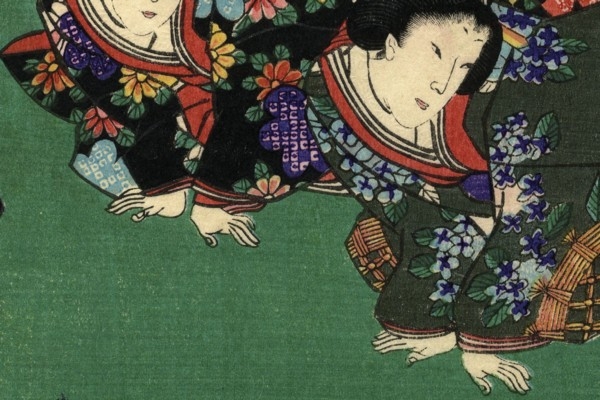
The exhibition displays works from the Japanese art collection of the Latvian National Museum of Art – colourful woodblock prints ukiyo-e, lacquerware, porcelain and ceramic objects, which depict this season so essential to Japan in a variety of ways.
The exposition unfolds across three thematic sections – Flower Viewing, Kabuki and Rituals – each offering a distinct perspective on the meaning of spring in Japanese culture. Flower Viewing explores the act of observation itself, where the presence of spring, an awareness of natural cycles, aesthetic sensitivity, and social togetherness converge. In the Kabuki section, spring emerges not simply as a season but as a dramaturgical and symbolic framework shaping theatrical narratives, visual expression and audience experience. The final section, Rituals, highlights spring as a time of transition in Japan, traditionally understood as the moment when one cycle ends and another begins, giving rise to rituals of purification, the restoration of harmony and prayers for a favourable future.
Par rakstu pārpublicēšanas noteikumiem lūdzam kontaktēties ar Travelnews.lv redakciju.




 --------
 Populārakie piedāvājumi